
Forge Equipment
Forge Setup and Fire Management
A practical look at coal and propane forge configurations, fire pot geometry, air supply systems, and the discipline of reading heat colour during ironwork sessions.
Read more →An archive of forge techniques, iron fabrication methods, and decorative ironwork rooted in Canada's metalworking tradition. From coal-fired forges to hand-hammered gates, this resource documents the knowledge behind the craft.
The Forge as a Workplace
Blacksmithing in Canada developed through a mix of British, French, and Indigenous metalworking traditions. Early forges were essential to settlement — producing nails, hinges, ploughshares, and tools that sustained farming communities across the Maritimes, Quebec, and Upper Canada.
The physical setup of the forge has changed little in two centuries: a fire pot, a bellows or electric blower, an anvil of cast or wrought iron, and a water trough for quenching. What has changed is the availability of materials and the range of fuel — from charcoal to coal to propane — each with its own fire-management discipline.
Read the forge setup guide →
Unlike modern mild steel, wrought iron contains slag fibres that run through the metal longitudinally — giving it a grain structure closer to wood than to cast iron. This makes it resistant to corrosion and far more forgiving under repeated hammer blows. Traditional Canadian ironwork relied heavily on wrought iron for gates, railings, and architectural hardware precisely because of these properties.
Fabrication TechniquesFrom the Archive
Three detailed looks at the core practices of ironworking in Canada.
Forge Equipment
A practical look at coal and propane forge configurations, fire pot geometry, air supply systems, and the discipline of reading heat colour during ironwork sessions.
Read more →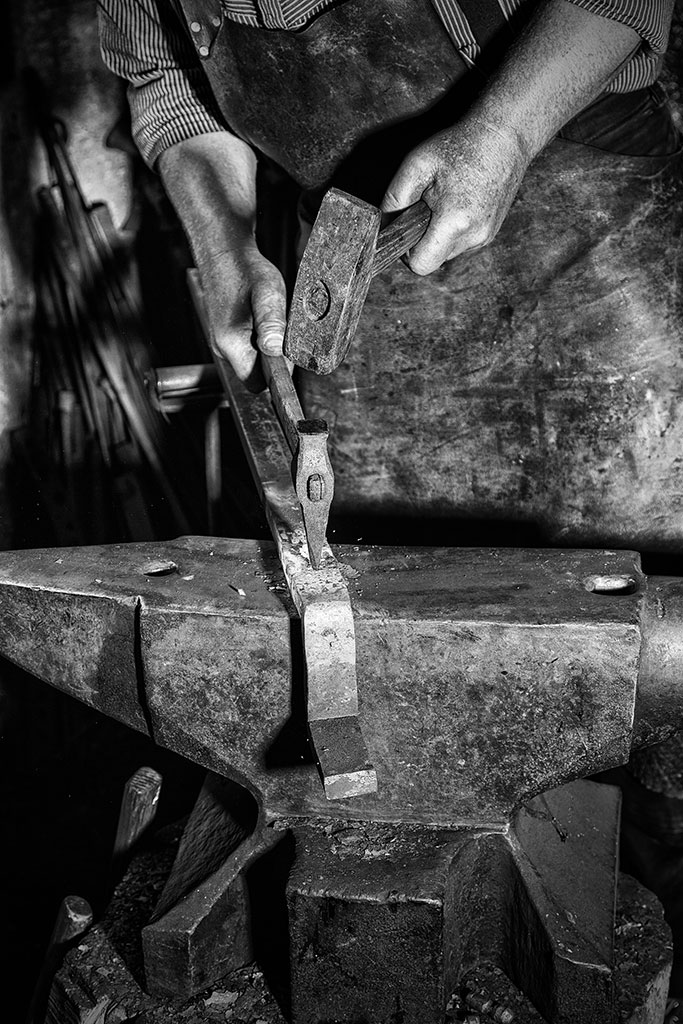
Fabrication
Drawing out, upsetting, punching, and forge welding — the four fundamental operations that define traditional wrought iron work, with notes on tool selection and heat management.
Read more →
Decorative Ironwork
How Canadian smiths adapted European scrollwork and joinery conventions to suit local architectural styles, from Quebec town houses to Ontario farmsteads and West Coast heritage buildings.
Read more →Wrought iron gates, railings, and hardware installed in Canadian buildings between 1750 and 1920 represent a largely undocumented category of craft heritage. Many examples survive in cities like Quebec City, Halifax, and Hamilton — attached to buildings listed under provincial heritage designation but rarely studied as ironwork artefacts in their own right.
Explore Decorative Ironwork
The Anvil as the Centre of the Craft
No piece of forge equipment has remained as consistent across centuries as the anvil. The London pattern — with its horn, table, and hardy hole — became standard across British North America by the early 1800s and is still the dominant form used by Canadian smiths today.
Weight matters more than most beginners expect. A 150 kg anvil will ring and bounce energy back into the hammer blow with a clarity that a 60 kg block cannot match. The rebound efficiency of a well-set anvil is as much a part of ironworking technique as the hammer swing itself.
Read about forge equipment →Get in Touch
Questions about content, corrections, or sourcing? Use this form to reach the editorial team at Iron Willow.
Iron Willow Media Inc.
147 Forge Street, Unit 4
Hamilton, Ontario L8L 4T2